

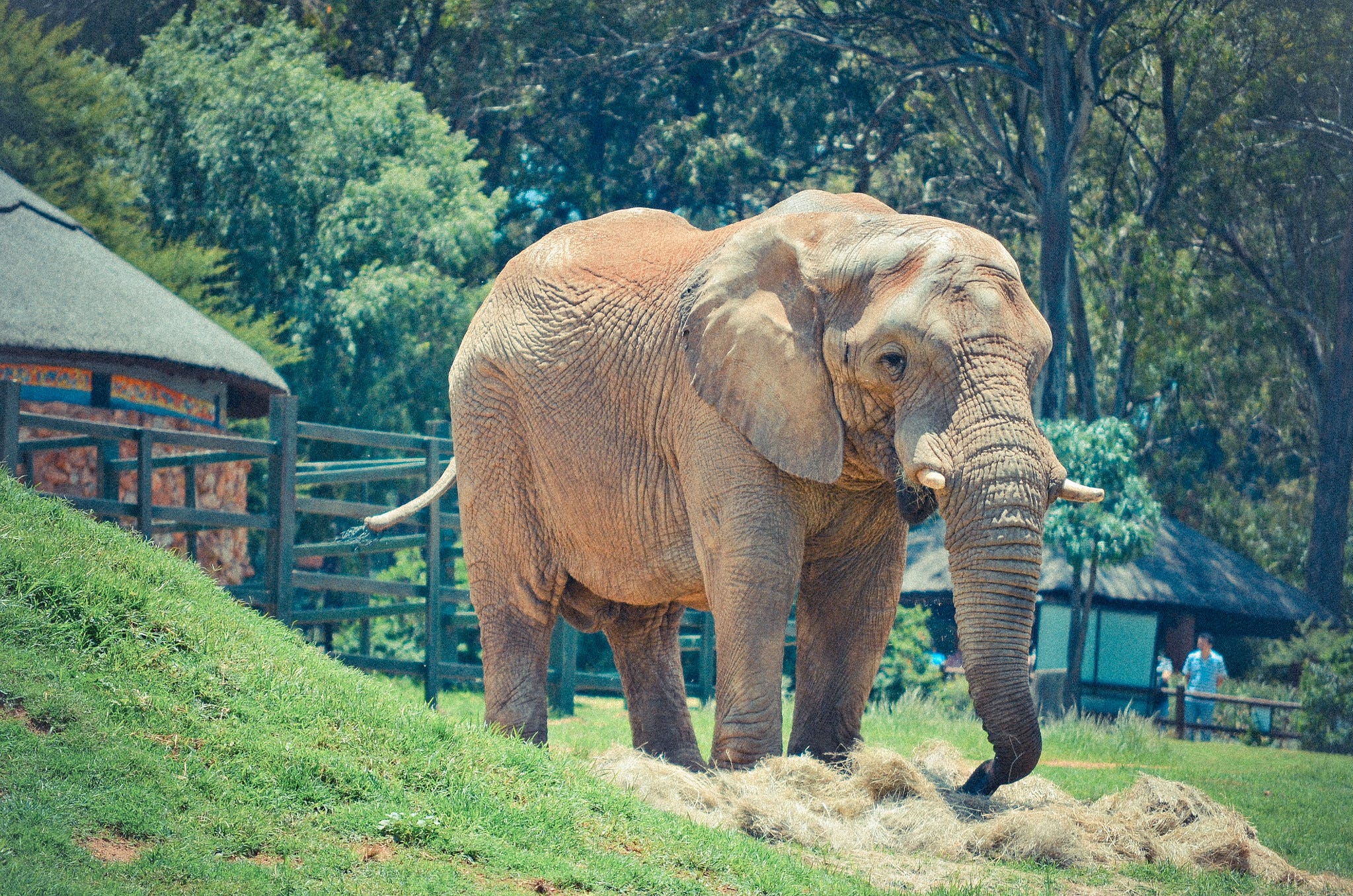
I have visited the Johannesburg Zoo many times. The elephant enclosure, as I've always experienced it, housing Lammie, Mopane, and Ramadiba, seems to be a reasonably large space. Like most of the other animals in the zoo, they are kept with others of their kind. When I've watched them, while reading or having a picnic, my instinct has been that they seem fine, going about their business, doing this or that, eating some branches given to them, and even engaging with onlookers.
But others say their state of living is dire. Can city “apartment living” ever be enough for these animals whose natural range spans thousands of kilometres and whose social world involves multi-generational bonds with dozens of others? This is the question that Animal Law Reform South Africa NPC v Johannesburg City Parks and Zoo NPC put before the Gauteng High Court.
I wanted to test my impression against what the evidence shows in the court record.
What the applicants argue
The application is brought by Animal Law Reform South Africa, the EMS Foundation, and Chief Stephen Fritz.1 The applicants contend that keeping Lammie, Mopane, and Ramadiba in captivity is unlawful and unconstitutional, rooting their case primarily in section 24 of the Constitution — the right to an environment not harmful to health and wellbeing. They argue that this right, read purposively and in light of existing precedent, generates obligations on the respondents to ensure the welfare of individual animals in their custody. That argument draws on a line of cases in which the SCA and Constitutional Court have progressively affirmed that animal welfare is embedded in constitutional values: animals are sentient beings possessed of intrinsic value, and they have the right to be protected.
The applicants also rely on the National Environmental Management: Biodiversity Act (NEMBA) as amended in 2022, which introduced a statutory definition of animal “wellbeing” — the holistic conditions conducive to an animal’s physical, physiological and mental health and quality of life — and requires it to be considered in management and conservation decisions. The applicants argue that the respondents’ ongoing decisions to keep the elephants must now comply with this provision, and that the continued captivity demonstrably fails that test. That word is currently at the centre of its own constitutional battle: the NSPCA is before the Constitutional Court defending the inclusion of “wellbeing” in NEMBA against a challenge brought by the South African Hunters and Game Conservation Association, with judgment pending. The outcome will matter for this case, too.
The applicants accordingly seek an order directing that the elephants be released and relocated to a suitable protected natural environment, through a carefully planned process to be implemented by expert veterinarians and rehabilitation specialists. They have secured an alternative sanctuary for the elephants, and suggest that part of their enclosure must be turned into an info centre about why elephants should not be kept in zoos. This matters because in reserves across South Africa, elephant overpopulation has led to contested culling; not all elephants are afforded the right to life.
The applicants explicitly limit the scope of the application: this is not a case about whether animals ought to be kept in zoos in principle. It is focused on these three elephants, at this zoo, in these conditions. They do not seek to challenge the suitability of keeping rhinos, tigers, a gorilla (as in the recent past and possibly in future), wild dog packs, and, as is now a thing of the past, polar bears.
The experts describe the main enclosure as essentially barren with minimal vegetation, little shade, and little for the elephants to interact with. The applicants argue that the elephants are too exposed to the sun in the outer enclosure, but the night enclosures, where they can retreat to, are smaller than a tennis court and made of concrete and get very hot.
The applicants allege that the elephants are released from the night enclosures only once staff have finished cleaning the outdoor area in the late morning, and brought back in long before they would naturally sleep, meaning they spend the majority of their waking hours in these small, contained spaces. All three have been observed engaging in stereotypic behaviour of psychological distress: repetitive, purposeless movement associated in the scientific literature with severe confinement. Dr Marion Garaï, the applicants’ founding expert, concluded in 2018 that Lammie was a “mentally broken elephant”; Mopane was bored and frustrated; Ramadiba was at risk of “total depression and apathy” — and was observed banging his head against poles. Later observations suggest Mopane and Ramadiba have since declined toward the same listlessness.
The applicants say the elephants are fed teff and hay thrown directly onto the ground, causing them to ingest sand as they sweep it up — the same mechanism that likely killed Kinkel, Lammie’s previous companion. Lammie reportedly eats sand regularly, which experts associate with mineral deficiency. Browse is sometimes thrown to them across the moat, a practice described as dangerous. Clean drinking water appears inadequate. The dry moat — a containment method now prohibited under international standards — has already cost Lammie a tusk and permanent leg damage after she fell into it. An international expert team that visited in 2023 described the animals’ overall condition as one of medical neglect.
On social dynamics: female elephants in the wild live in large multi-generational groups; international standards require at least three adult females in captivity. The zoo has one. Experts note that Lammie was not ready for two new wild-caught elephants arriving into her small space, and does not function as a matriarch.
The applicants point to a growing international consensus, evidenced both by litigation and by voluntary decisions taken by zoos themselves, that elephants and zoo (and circus) captivity are a poor fit. A high court in Pakistan ordered the release of an elephant from the Islamabad Zoo after it found that three decades of captivity had subjected him to “unimaginable pain and suffering.” On the zoo-closure side, Detroit, San Francisco, Edinburgh and several others have voluntarily ended their elephant exhibits.
The amici, two Harvard Law academics2 who have intervened in similar cases in other jurisdictions, in their heads of argument,3 survey a growing body of case law from the Global South in which courts have used constitutional environmental rights, and in some cases the concept of legal personhood for animals, to come to the aid of captive animals.
In 2025, the Mexican Supreme Court upheld an order requiring improved welfare conditions for Ely, an African elephant held in isolation at a Mexican zoo, invoking the precautionary principle and the constitutional right to a healthy environment in terms broadly comparable to our section 24. In Argentina, courts have recognised elephants and great apes as non-human persons entitled to legal protection, and have ordered relocations to sanctuaries accordingly.
The amici also draw on international law: the Inter-American Court’s 2017 advisory opinion that the right to a healthy environment protects the components of nature in their own right, extended in 2025 to recognise nature itself as a subject of rights; and the African human rights framework, which they argue — through instruments like the Revised African Convention on the Conservation of Nature and the concept of ubuntu as articulated by South African philosopher Mogobe Ramose — is accommodative of a relational, non-anthropocentric understanding of our obligations toward the natural world. Their conclusion is that South African courts have already been at the forefront of this global movement through NSPCA v Minister of Justice (2016), in which the Constitutional Court affirmed that animal welfare is embedded in constitutional values and that the rationale behind protecting animal welfare has shifted from merely safeguarding the moral status of humans to placing intrinsic value on animals as individuals, and that this case is an opportunity to carry that jurisprudence further.
The third applicant, Chief Stephen Fritz, contends that the manner in which the elephants are kept offends the living heritage of the Khoi people — their values, spiritual beliefs, and holistic approach to nature and the environment. This grounds the case in the rights to dignity and cultural life under sections 10, 30, and 31 of the Constitution.
What the Zoo says
The respondents’ answering affidavit, deposed to by Thanduxolo Mendrew, the Zoo’s Managing Director, paints a picture of care rather than neglect. The respondents' heads of argument4 mount a layered legal case that, if it succeeds on any of its preliminary points, means the judge need never reach the question of whether the elephants are suffering at all.
The first argument is one of constitutional subsidiarity. South Africa’s legislative framework governing the keeping of elephants in captivity — the National Environmental Management: Biodiversity Act, the Threatened or Protected Species Regulations, and the National Norms and Standards for the Management of Elephants in South Africa — has been in operation since 2008. The Johannesburg Zoo holds a valid permit under this framework, issued by the MEC as the designated issuing authority, which expressly authorises it to keep elephants as a commercial exhibition facility. The respondents submit that the applicants, by invoking section 24 of the Constitution directly, have bypassed the legislative framework that the legislature put in place to give effect to section 24. If the framework is inadequate, the respondents argue, the applicants should have challenged its constitutionality. If the Zoo is breaching the framework, the applicants should have approached the issuing authority to revoke the permit, or laid criminal charges. The respondents say the failure to do so is fatal to the application.
The second preliminary argument is that the disputes of fact are irresolvable on paper. The parties have presented competing teams of experts holding fundamentally divergent opinions about the behaviour, psychological state, and welfare needs of the three elephants. The respondents submit that no court can make the positive factual findings the applicants seek without hearing oral evidence, and potentially conducting an inspection in loco.
On the substance, Lammie was born at the Zoo in 1979. She is 47 years old. Kinkel, her companion of 18 years, died in September 2018 — not through negligence, the Zoo says, but as an unavoidable consequence of a trunk injury he had sustained before his rescue from Botswana, which caused him over many years to ingest more sand than his digestive system could manage. After his death, the Zoo halted Lammie’s training regime and had staff sit with her through the days and evenings as she was mourning. Mopane and Ramadiba were acquired in 2019 specifically to provide her companionship — sourced, the Zoo says, from a game reserve in the Eastern Cape where they were facing culling because the owner could no longer manage them, and where Ramadiba had been kept chained at his ankle. The Zoo’s position is that it gave both animals a second life.
The enclosure has since been expanded to just over 11,000 square metres — achieved by incorporating the adjacent rhino enclosure — and the respondents submit that this exceeds the minimum standards set by the overwhelming majority of international zoo bodies, including those cited by the applicants’ own experts (the applicants say the elephants are only infrequently let into the adjacent enclosure). The Zoo’ expert, WK Lindsey, tabulated six different international standards and concluded that the Zoo complies with all but two, which require sufficient space for elephants to walk 10 kilometres per day.
The Zoo says there was no repeated incident after Lammie was injured by falling into the moat in 2001, and that neither Mopane nor Ramadiba has ever fallen into the moat.
The elephants allegedly receive browse twice daily, collected through a social media campaign asking Johannesburg residents to report tree pruning in their areas. A professional nutritionist has developed individualised diet formulations for each animal — each receiving multiple types of pellets, daily mixed vegetables including oranges, apples, cucumbers, peppers, tomatoes, brinjals, marrow and leeks, in addition to teff and lucerne. There are enrichment programmes, monthly behavioural reports, training sessions using positive reinforcement, and a team of keepers who have worked with Lammie for up to twenty years. In April 2024, all three animals were sedated and given comprehensive medical assessments by a team from Onderstepoort — which, the Zoo says, produced clean bills of health, including radiographs of Lammie’s feet showing no abnormalities.
The Zoo disputes the applicants’ expert evidence. The video footage relied upon was recorded during periods of known distress: Lammie grieving Kinkel’s death in October 2018, and Mopane and Ramadiba adjusting to an entirely new environment during August 2019 to March 2020. The Zoo says neither context was disclosed to the experts who formed opinions based on that footage. The Zoo’s expert explains that what was initially characterised as negative stereotypic behaviour in Ramadiba was, on closer analysis, anticipatory excitement triggered by the arrival of the feeding vehicle — and was resolved by adjusting the feeding routine.
The respondents also dispute specific factual claims. The enclosure is not barren: photographs show large trees, seasonal grass and shrubbery, rock boulders, suspended tyres, and multiple scratching poles. The night enclosures, while shared, exceed the requirements of all six international zoo standards. The allegation of no clean drinking water is contradicted.
The Zoo also points to the case of Thandora — an elephant from the Bloemfontein Zoo relocated to a rewilding facility, who could not adapt to foraging for food after decades of captivity, gravitated toward human settlements, ate from rubbish bins, and died with plastic lodged in her intestines. The applicants’ response to this is that Duma (formerly Charlie), the elephant from the Pretoria Zoo, was successfully relocated to Shambala Private Game Reserve in August 2024 and released into a 26-hectare enclosure in October 2024. Notably, the applicants introduced this evidence in their replying affidavit, and the Zoo sought to have those paragraphs struck out — while the applicants have since described the Duma evidence as “only tangentially relevant”.
On the Khoi heritage argument specifically, the respondents submit that it finds no support in the Natural Heritage Resources Act relied upon by Chief Fritz, which limits a heritage resource to a place or object of cultural significance and says nothing about the keeping of elephants.
Where I come to stand
Reading the pleadings has complicated my view in both directions. Judge Noluntu Bam will have to make a finding after the hearing on 21 May 2026. The judgment might likely be appealed.
The case might be decided on legal grounds (subsidiarity, dispute of fact), not on the merits. If the judge has an appetite for more, we might get a judgment that addresses the elephants’ interests.
There is an inherent tension in humans speaking for animals, deciding what is best for beings who cannot instruct a lawyer or express a preference in any form that a court can receive. Both sides say it is necessary not to anthropomorphise the elephants. But to assess whether an elephant is depressed, to evaluate whether her behaviour is stereotypic of severe stress, or to come to the conclusion that they are doing fine, given the circumstances — all of this requires the inference of an inner life from observable behaviour. That inference is unavoidable. The question is whose inference the court accepts, and why.
This case is morally greyer than cases involving solitary elephant confinement, unprofessional backyard zoos or circus performance. Is it likely that these elephants would prefer to live the remainder of their lives in a larger sanctuary where they can roam and browse naturally? I think so. Are the conditions they are kept in inhumane? I don’t think so. But “not inhumane” is not the same as “just”.
A more traditional legal mind will weigh the human interest too — the educational value to the many thousands of children who visit this zoo and for whom a game lodge is not an option.
Whose interests triumph? In which circumstances is the injustice greatest?
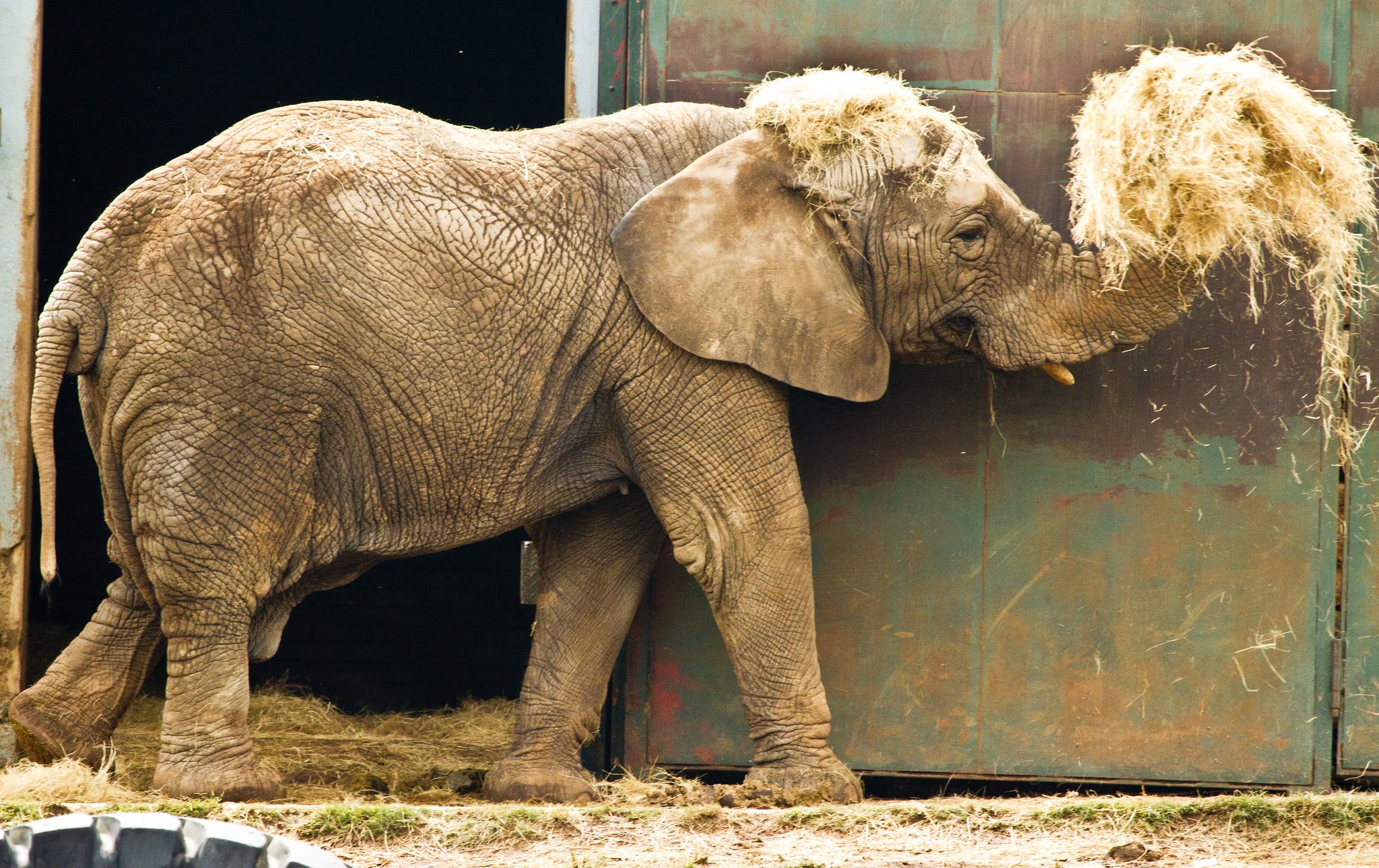
A translated version of this piece was published in Rapport on 5 July 2026: ‘Wat weeg swaarder: Die lot van Lammie of ’n kind se reg om ’n olifant te sien?’
The applicants’ counsel are Anthony Stein SC, Jessica Griffiths, Faatima Mahomed, and Ruth Krüger.
Professor Kristen Stilt, Faculty Director of Harvard Law School’s Animal Law & Policy Program, and her colleague Dr Macarena Montes Franceschini.
Counsel for the amici: Chris McConnachie, Michaela Kritzinger, and Thamsanqa Malusi.
Counsel for the respondents: Robert Stockwell SC and Willem Bezuidenhout.
I found this Adam Cruise article's conclusion pressing: "For the last elephants held in a South African zoo, the issue is not whether change will come. It is whether it will come in time."
https://www.dailymaverick.co.za/opinionista/2026-05-18-the-last-zoo-elephants-why-johannesburg-can-no-longer-justify-their-captivity/